Lexington, KY · Garage Door Service
Lexington homes built between 1956 and 1991 still run original torsion springs and openers. We diagnose and fix the failures that come with that age and our winters.
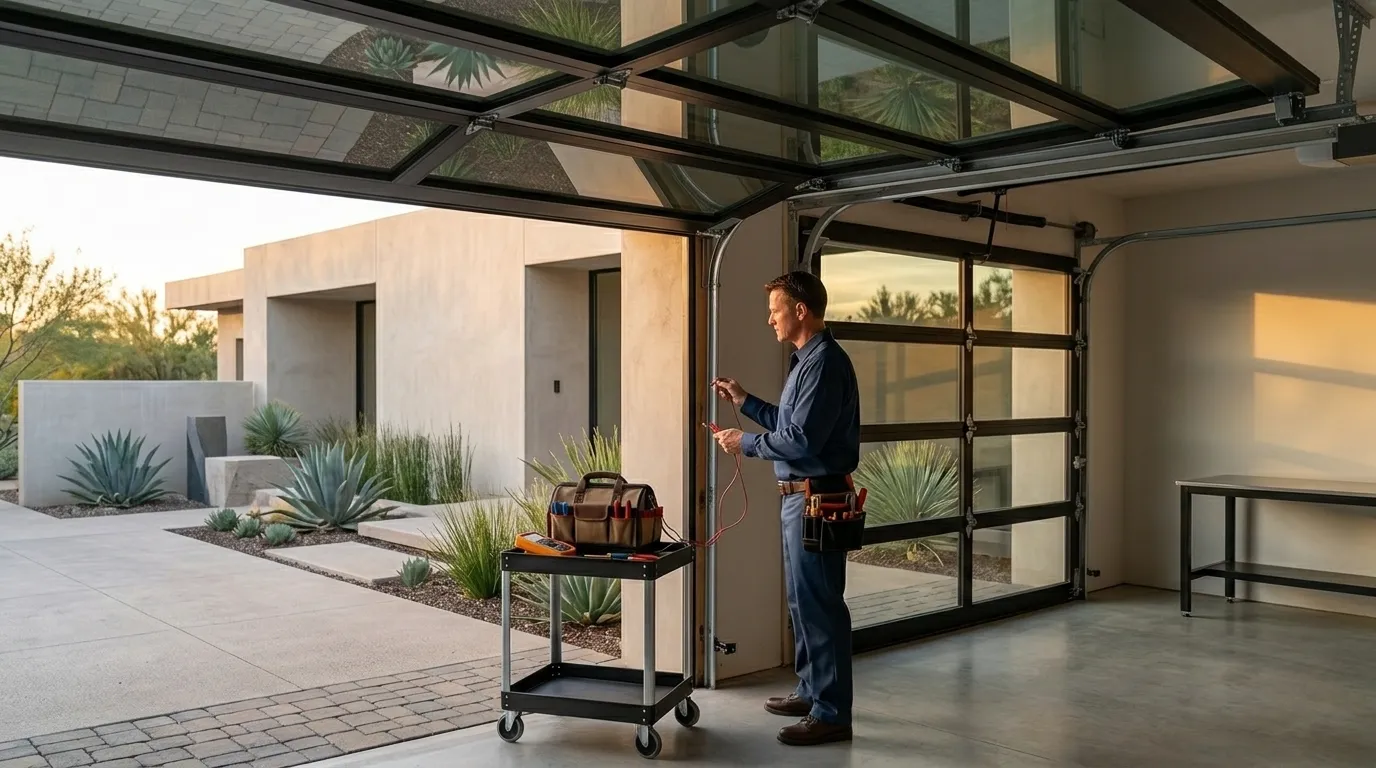
When we get a call for a door that won't move, or one that slams down the last foot of track, we start with the spring and the cable drums before we touch the opener. In a service area where most houses went up between 1956 and 1991 (median build year 1979), that's usually where the problem lives. A torsion spring rated for 10,000 cycles back then has long since used up its life, and the steel has fatigued from four decades of cold-weather contraction and summer humidity swelling the wood jamb it's bolted to.
We measure the spring wire diameter and wind count against the door weight rather than guessing off a chart, because a lot of the doors we see in this area were re-sprung once already with a mismatched part. Same with rollers and hinges: if the track is original, the hinges are usually worn oval instead of round, which is why the door shudders instead of gliding.
We replace what's failed, not the whole assembly, unless the door itself has reached the point where patching one more part doesn't make sense. On a door that old, sometimes the honest fix is telling you the track and springs are worth replacing together rather than one more emergency call six months from now.
Cold moderate winters don't crack a garage door the way a hard freeze region does, but they do the slow damage: steel torsion springs contract and expand through repeated cold snaps and thaws, and that cycling is what fatigues the wire faster than a warmer climate would. Add in housing stock that's mostly 1960s and '70s across the five main areas we work, and you get a lot of doors carrying original springs and drums that are 40 to 60 years past their rated cycle count.
The other piece is what was standard when these houses were built. Builders in that era used lighter-gauge torsion springs and single-track roller systems that were fine for the doors of the time, but those same parts under today's heavier insulated doors are working harder than they were designed to. When a homeowner swaps in a heavier door without upgrading the spring, the failure shows up sooner, not later.
We don't see much wood rot or warping tied to this climate band the way a wetter region would report, so when a door binds here, it's almost always mechanical fatigue or a hardware mismatch, not moisture damage to the panel itself.
The pattern we hear most on the phone: the door starts fine, gets partway up, and then the opener strains or reverses itself back down. That's a spring that's lost tension doing a job the opener motor was never built to do alone. Some owners hear a loud bang from the garage first, which is the spring itself giving out, usually a torsion spring since that's what's on almost every door built or retrofitted since the 1970s in this area.
A second version: the door closes unevenly, one side dropping faster than the other, which points to one drum or cable carrying more load after the other side's spring weakened first. That's more common on older two-spring setups where the springs were never replaced as a matched pair.
Either way, waiting doesn't help. A door running on a failing spring puts extra strain on the opener's gear and the track hardware, so one failure often drags a second one behind it within a few months.
Torsion springs store enough tension to cause a serious injury if you release them wrong, and that's true regardless of how old the door is. We won't walk anyone through spring replacement over the phone, and we'd tell you the same thing in person: this is the one repair on the whole door where we draw a hard line.
What you can check yourself: whether the noise is coming from the rollers (a metallic rattle as the door moves) versus the spring area (a groan or a bang when the door is at rest). Lubricating rollers and hinges with a garage-door-specific lubricant, not WD-40, is safe DIY work and worth doing twice a year given the temperature swings this area sees.
Beyond that, if your house falls in the 1956-1991 build range that describes most of this area, and the door has never had the springs replaced, that's worth a call before it fails at the worst time, usually a cold morning when you're already late. Get in touch if you want a straight answer on which repair actually applies to your door.
Cold moderate winters put repeated cold-to-warm cycling stress on torsion spring steel. That cycling fatigues the wire faster than a stable climate would, and in a service area where most homes were built between 1956 and 1991, a lot of those springs are already decades past their rated cycle count.
It usually means one torsion spring or cable is carrying more load than the other because its match has already weakened. This shows up more on older two-spring setups from houses built in the 1960s and '70s that never had both springs replaced together.
If the opener is straining to lift a door with a weak spring, replacing the spring alone often solves it. We only recommend opener replacement when the motor itself has failed, not just because it's working hard to compensate for bad springs.
No. The wound tension in a torsion spring can cause serious injury if released incorrectly, and that risk doesn't change based on the door's age or brand. This is one repair we always do in person.
Call now or request a free quote - same-day service on most repairs, upfront written pricing.