Lexington, KY · Garage Door Service
Lexington homes built between 1956 and 1991 often have garage doors and hardware worth saving. Here's how to tell what's worth fixing and what to replace.
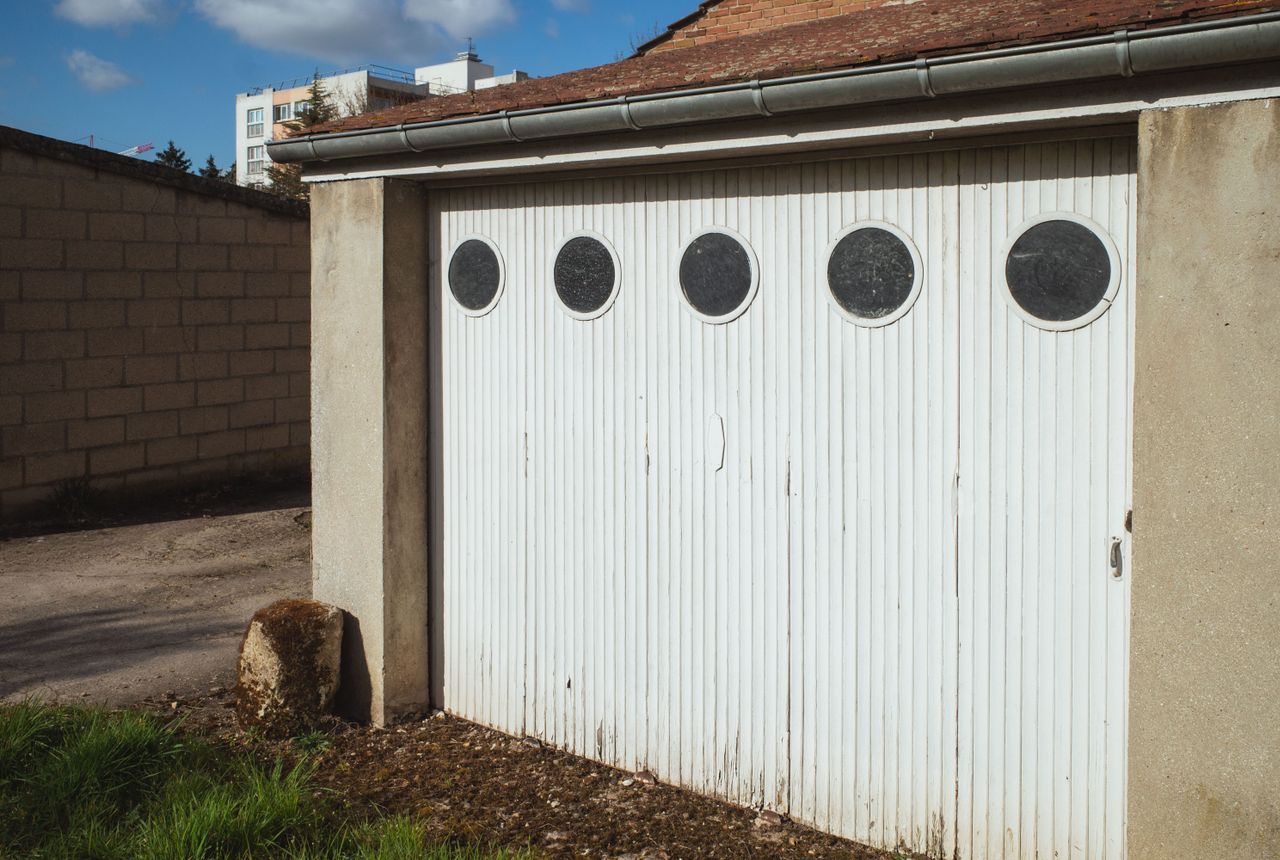
Start with the spring type. Most houses in the Lexington service area went up between 1956 and 1991, with the median landing around 1979, and that generation of door almost always runs on a torsion spring mounted above the opening rather than the older extension-spring setup along the tracks. Look at the coil. If it's rusted through in spots, gapped unevenly, or has a visible separation, that's wear, not just cosmetics. Next, check the tracks for dents or bends - with a house this age, the original steel track has usually taken forty-plus years of temperature swings, and a bent section will show up as the door sticking or jerking partway through its travel. Run your hand along the weatherstripping at the bottom panel. If it's cracked or flattened, cold air is getting in, and in this climate that matters more than people think. Roll a garage door up and down slowly and listen for grinding at the rollers - steel rollers on original 1960s and 70s hardware wear out loud, well before they fail outright. None of this requires tools beyond a flashlight and a stepladder. What it does require is doing it before the door decides to test you on a January morning.
Torsion springs are wound under real tension, and loosening or replacing one without the right winding bars is how people lose fingers, not exaggeration. If your check-up turns up a spring that's cracked, unwound, or making a popping sound when the door cycles, that's a call, not a project. Same goes for a cable that's frayed near the drum - a cable under load that snaps can whip hard enough to dent a car or a wall. We also won't talk anyone through re-tensioning an opener's travel limits on a door with an original 1970s-era track, because on hardware that old, the tolerances are tighter than modern replacement parts assume, and a bad adjustment can rack the door off its rollers entirely. Here's the honest limit on our end too: if a panel section is rusted through structurally, or the door is warped enough that it binds even with the track re-aligned, we're not going to keep patching it. At some point on a door built to 1970s standards, the labor to keep it road-worthy costs more over two or three years than a new door would, and we'll tell you that instead of billing you for it piecemeal.
A garage door built during the 1956-1991 run in this area was engineered for a different set of expectations than what's sold today. Steel gauges were often thinner, insulation wasn't standard on a lot of the stock from that period, and the hardware - hinges, rollers, the drum the cable winds onto - was sized for lighter daily-use assumptions than a household running an opener twice a day for decades. Across the five areas that make up this housing stock, most of what's still standing dates to the 1960s and 70s specifically, meaning the majority of doors we look at aren't failing from one bad part, they're failing from cumulative fatigue across several parts at once: a roller that's slightly worn making the track work harder, which stresses the spring a little more, which makes the opener strain a little more. Across the roughly 19,064 households in the service area, about 8,134 are owner-occupied houses - the group most likely to still have original or first-replacement hardware rather than a fully modern system. That's the pool this kind of repair-or-replace judgment call actually applies to.
Lexington sits in a cold-moderate climate band, and that matters more for an older door than most people assume. Metal tracks and torsion springs expand and contract through freeze-thaw cycles every winter, and on hardware that's been through forty or more of those cycles, the fatigue shows up as a spring that's lost tension faster than its age alone would explain, or a track that's shifted just enough to bind in cold mornings and run fine by afternoon. Weatherstripping on original 1970s-era doors wasn't built with today's sealing standards in mind, so cold air finds the gaps first at the bottom panel and around the seams. If you're anywhere between Wilmore, about 13 miles out, and Paris, about 18 miles out, you're likely dealing with the same generation of door, since that housing era covers the wider service area, not just the center of town. With a median household income of $58,834 across the area, replacing a whole door isn't always the first move a homeowner can afford, which is part of why getting the repair-or-replace call right - rather than defaulting to either extreme - actually saves money here.
If your house was built in the 1956-1991 range common to this area and the spring has never been swapped, it's likely original or close to it. Look for heavy surface rust, uneven coil spacing, or a spring that looks noticeably thinner than the mounting hardware around it. A spring that's forty-plus years old is past due for replacement even if it hasn't failed yet.
Often yes, if the panels and frame are sound and it's mainly springs, rollers, or weatherstripping that have worn out. Where it stops making sense is a warped or structurally rusted panel - patching that repeatedly usually costs more over a couple of years than replacing the door once. We'll tell you which side of that line your door is on.
Yes. In a cold-moderate climate like this one, metal tracks and springs go through expansion and contraction every winter, and on hardware that's decades old, that cycling speeds up fatigue you'd otherwise not notice until it fails. Cracked weatherstripping on older doors also lets more cold air through than most people expect.
We don't recommend it. Torsion springs are wound under significant tension, and the winding bars and technique matter more than most DIY guides make clear. It's one of the few jobs on a garage door where the risk of a serious injury outweighs the money saved, especially on older hardware with less predictable tolerances.
Call now or request a free quote - same-day service on most repairs, upfront written pricing.