Lexington, KY · Garage Door Service
A look at what a real service call checks on Lexington homes built between 1956 and 1991, and why the region's cold winters change the diagnosis.
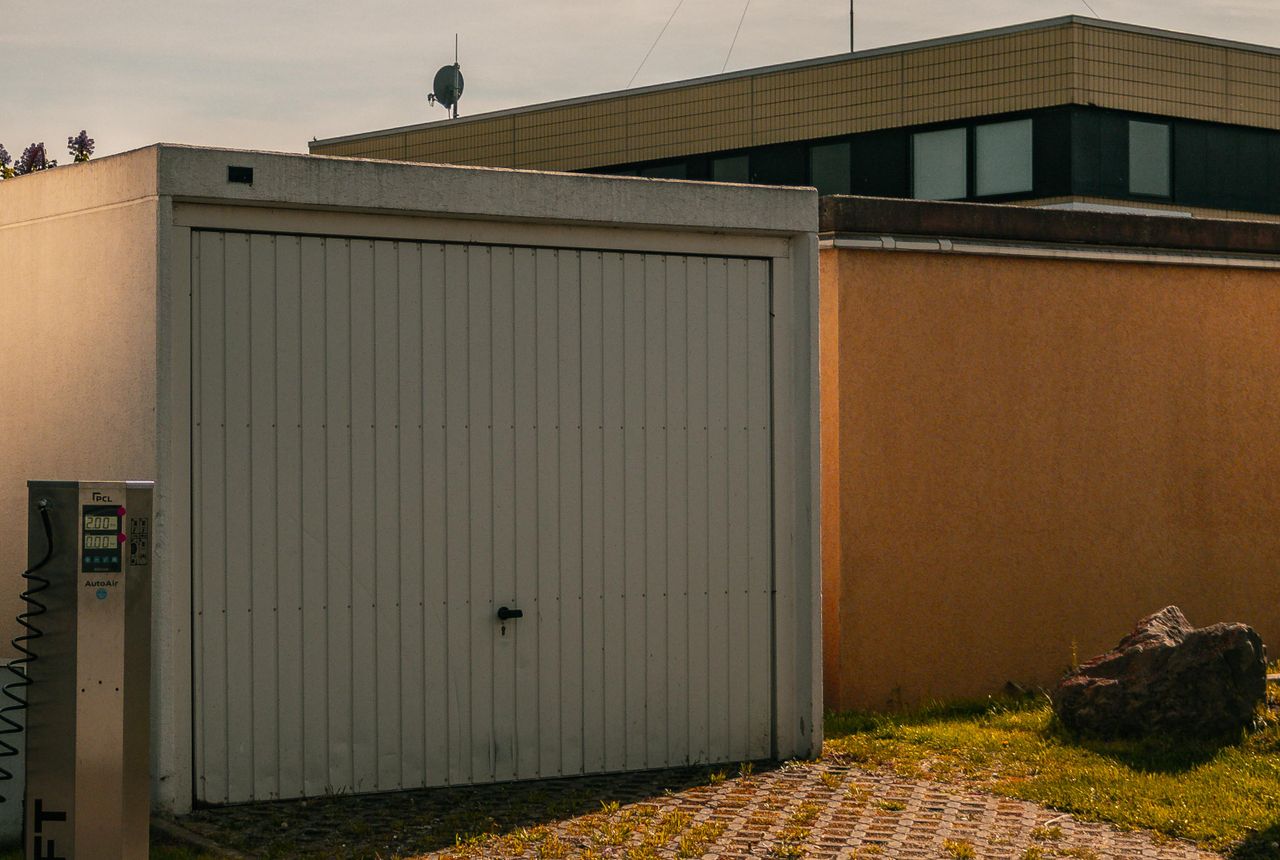
Before you call anyone, open and close the door by hand with the opener disconnected. If it's hard to lift or won't stay open partway, the springs are losing tension - normal after years of cycles. Look at the tracks for gaps where rollers ride outside the rail, and check the bottom seal for cracks; a lot of houses in this area were built between 1956 and 1991, and original hardware from that era is still on plenty of doors. Listen for grinding or popping when the door moves - that's usually a roller or hinge, not the opener. If the door reverses on its own before touching the floor, that's the safety sensors, and they're worth checking before assuming it's something bigger. None of this requires tools beyond a flashlight and a step stool. What you're doing is narrowing down whether the problem is the spring system, the track alignment, or the opener logic, because those are three different jobs with three different price points and none of them get cheaper by waiting.
Torsion springs are under real tension and they've put people in the ER - that's not a scare tactic, it's why we don't talk anyone through replacing one over the phone. If your door is a double, wide panel from the 1960s-70s stock common across this area, it likely runs on a single torsion spring rated for that width and weight, and that's not a part you want to guess the size on. Same goes for anything involving the cable drums or the bottom brackets, which hold the cable under load even when the door is sitting still. If the opener motor runs but the door doesn't move, or moves and then reverses hard, stop trying things and call. One honest limit: if a spring has already snapped and the door is stuck partway, we won't walk you through freeing it yourself - that's a same-day call, not a project.
On a lot of the service calls we run, the door itself is fine and the problem is the hardware around it aging out at the same rate. Housing in this service area mostly went up in the 1960s and 70s, with the broader range running 1956 to 1991, which means original springs, rollers, and sometimes openers are still doing the job decades past when they were built to. Steel rollers wear grooves into the track over time, and standard torsion springs have a duty-cycle life - they don't fail because of one bad day, they fail because they've been open and closed that many thousand times. On older installs we also see galvanized cable starting to fray at the drum, which is a slow failure you can usually catch before it snaps if you know where to look. None of this is dramatic. It's ordinary wear showing up on schedule for houses this age.
This region sits in a cold, moderate climate band, and that matters more for garage doors than people expect. Cold snaps stiffen the grease in bearings and hinges, which is why a door that worked fine in October can start groaning or sticking once temperatures drop - the metal hasn't changed, the lubricant has. Weatherstripping on doors from the older end of the local housing stock tends to harden and crack faster through repeated freeze-thaw cycles than it would in a warmer climate, which shows up as drafts and light gaps at the bottom seal. None of this means the door is broken. It means the same wear patterns we see across owner-occupied houses in this area - and there are over 8,100 of them - get accelerated a little by the winters here, and a service call in January often turns up things that were fine to ignore in July.
We don't have a fixed number to quote without seeing the door - spring size depends on door weight and width, and that varies a lot across the 1960s-70s housing stock common in this area. A tech can give you a firm price on site after checking the spring rating and door type.
Cold stiffens the grease in rollers and hinges, and older weatherstripping hardens and cracks faster through freeze-thaw cycles. Neither means the door is failing - it usually just means the wear that was already there is showing up sooner because of the season.
Depends on the door. If it's an original panel from a 1960s or 70s build with a bent track or worn springs, repair is usually cheaper. If the panels themselves are dented, rusted, or warped, replacement often makes more sense long term - a tech can tell you which situation you're in.
Call now or request a free quote - same-day service on most repairs, upfront written pricing.