Lexington, KY · Garage Door Service
Garage door repair and spring service for Harrodsburg, KY homes, most built around 1971. We travel from Lexington, 25 miles away, for original hardware and steel doors.
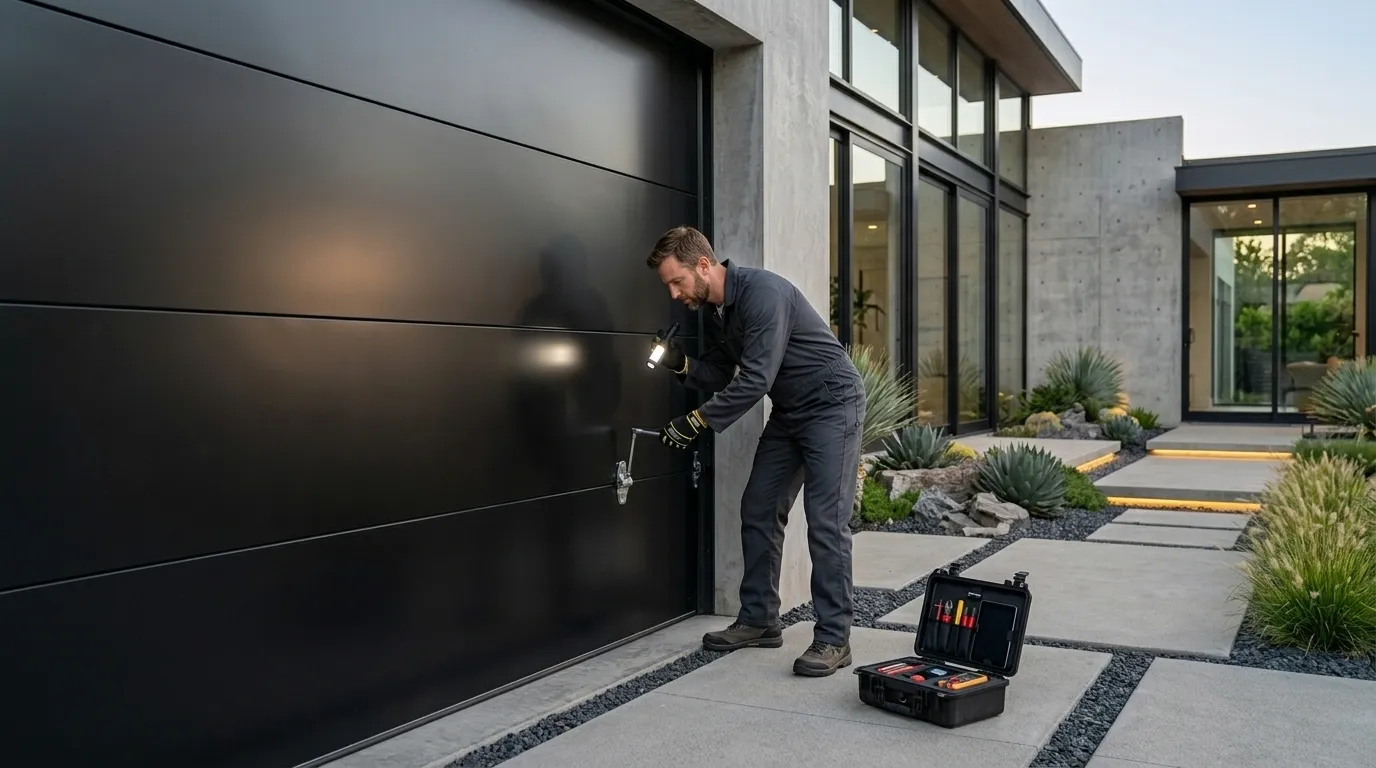
We don't keep a truck stationed in Harrodsburg, and we won't tell you we do. Every job here starts with a drive from Lexington, so we don't promise same-day arrival the way a shop based in town could. We also don't stock every odd-sized panel or obsolete opener board on the truck sight unseen - if your door is old enough that the manufacturer no longer makes the part, we tell you that on the phone before we load anything, not after we've made the trip. We don't do new-construction installs where a builder wants a custom size cut to spec; that's a different trade than repair and replacement. And we won't sell you a full opener swap when a $30 sensor or a bent track is the actual problem. If a repair costs more than about half of what a new door runs, we say so plainly instead of nickel-and-diming a dying door along.
What we will do is show up with the springs, cables, and rollers that fit what's actually on your house, because we've looked at what's out there before we drive down.
Harrodsburg sits about 25 miles from Lexington, which puts it on the far edge of our coverage rather than the middle of it. We're not the closest company on paper, and we won't pretend otherwise. What that means practically: we batch calls out this way when we can, and we're upfront on scheduling rather than promising a window we can't hit from that distance.
The route out passes through the same stretch of central Kentucky that includes Burgin, about 22 miles from Lexington, and Salvisa, around 21 - both closer to Lexington than Harrodsburg is, and both smaller. Lancaster is a bit further out at 26 miles. None of that changes the work once we're at your door, but it's part of why we ask a few more questions on the phone before we head your way - a wasted 25-mile trip for a part we didn't know we needed is a wasted afternoon for both of us.
The median house in Harrodsburg was built around 1971, which is a few years earlier than the 1974 median across our wider coverage area. That's not a big gap on paper, but it puts a meaningful share of Harrodsburg's roughly 4,044 households into an early-1970s build window rather than the mid-70s one that's more common elsewhere on our routes. Early-70s garage construction in this part of Kentucky generally means single-car or narrow two-car openings, steel doors from that first wave of mass-produced sectional units, and openers that have likely already been replaced once or twice since the house was built - the doors themselves outlast the motors.
Median household income here runs around $46,821, noticeably below the roughly $57,653 median across the broader service area. That gap tends to show up in how repairs get requested: more calls for keeping an aging door running another few years, fewer for straight replacement, and more attention paid to whether a part is worth sourcing versus whether the whole door has reached the end of its useful life. The winters here fall in a cold-moderate climate band, which is hard on steel doors with worn weatherstripping and on springs that have gone a decade or two without adjustment.
A door installed around 1971 is old enough that it's probably had at least one spring replacement already, and if it hasn't, that's usually the call we get - a torsion spring that's simply given out after fifty-some years of cycles, sometimes with the cable snapping right along with it. Steel doors from that era also tend to run thinner gauge panels than what's sold today, so a dent from a bumper tap can do more visible damage, and replacement panels for a door that old often aren't available at all, which pushes the conversation toward a full door swap rather than a patch.
Hardware-wise, we see a lot of side-mounted or older-style track brackets on houses from this build window, which don't always match the roller and cable sizes that come standard on newer stock parts. It's not a reason to avoid fixing an old door - most of these repairs are straightforward once we know what's actually mounted on the wall - but it is why we ask for a photo or two of the track and spring setup before we quote anything sight unseen.
No. We're based in Lexington and drive out to Harrodsburg for service calls, about 25 miles each way. We don't advertise a local depot here because we don't have one - we'd rather be straight about that than imply a presence that doesn't exist.
Depends on the part that failed. A worn spring, cable, or roller is almost always worth replacing on an older door. But if the panels themselves are dented, rusted through, or the door is a size nobody stocks anymore, replacement usually makes more financial sense than chasing parts for a 1970s-era door.
Because it probably is. In houses built around 1971, the door itself often outlasts two or three openers. The steel sectional door can run for decades with basic maintenance; the motor and drive mechanism wear out on a shorter cycle and get swapped along the way.
We don't promise that for Harrodsburg specifically, since every call means a 25-mile drive from Lexington. We'll give you an honest window when you call rather than a guess we can't back up.
Call now or request a free quote - same-day service on most repairs, upfront written pricing.