Lexington, KY · Garage Door Service
Rollers on Winchester's 1970s-era doors wear differently than newer stock. We drive the 16 miles from Lexington with the steel and nylon rollers that fit.
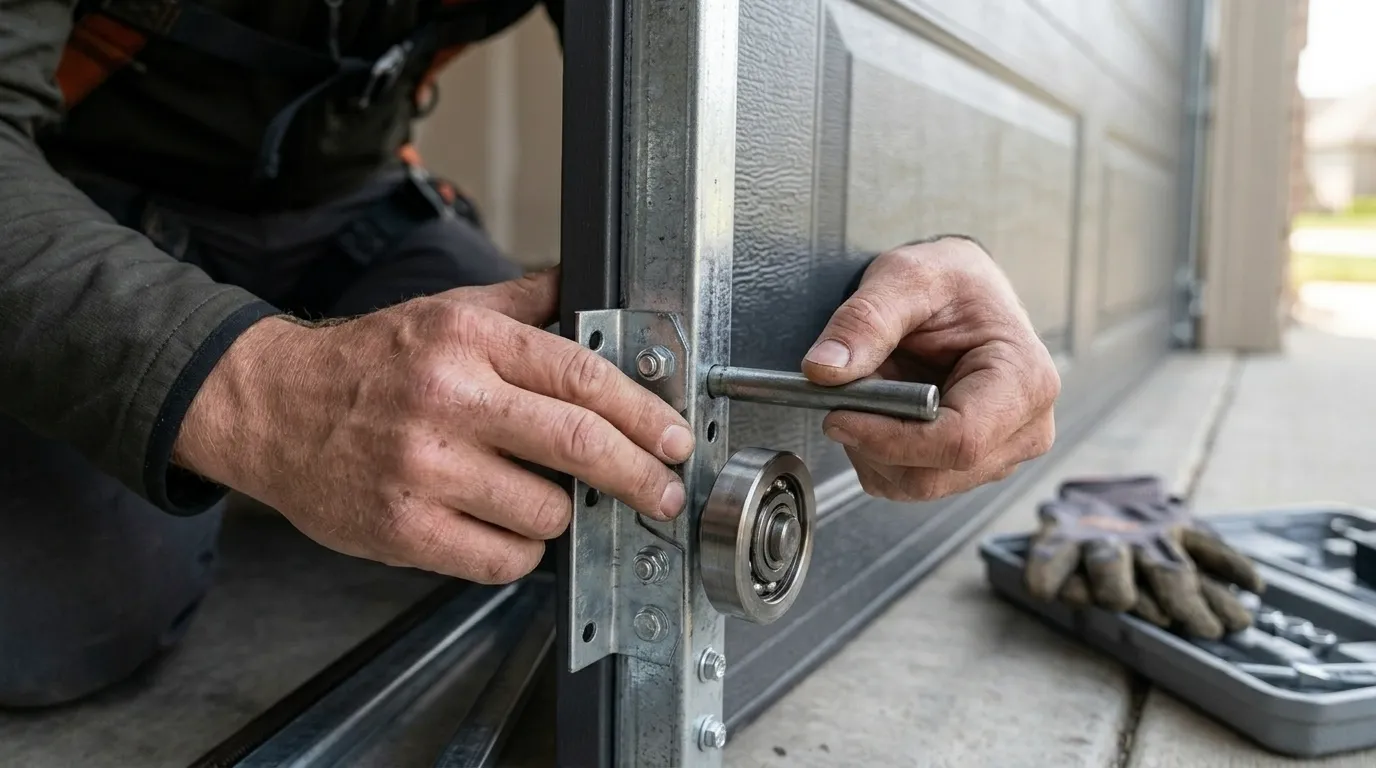
It's a 16-mile drive from our shop in Lexington out to Winchester, and that trip shapes how this call goes. We're not stopping by on a whim between other jobs in town - when we book a roller replacement out here, we load the truck with what a Winchester door actually needs before we leave, because turning around for a part isn't part of the plan.
Most of what we see on that drive is a door groaning, grinding, or hanging up a few inches before the top of the track - a classic worn-roller sound, not a spring problem. On the housing stock out here, built mostly between 1956 and 1991 with a median year of 1974, that groan usually means the original steel rollers have gone dry and pitted, or the roller stems have worn oval in tracks that have never been replaced. If the door jerks at one specific spot every time, that's a roller hitting a bent section of track, not a random fault - and it tells us what to bring before we ever see the door in person.
Doors from the 1960s and 70s around here were mostly built with 7-ball steel rollers on stems that don't match the sealed nylon rollers sold in most box stores today. We carry both - steel rollers for owners who want an exact swap on original hardware, and sealed nylon for owners who are tired of oiling rollers every season and want quieter operation going forward.
Because the drive out is real, we bring a full roller set (all ten to twelve, not just the two that are obviously shot) plus spare hinges, since worn rollers on an older door usually mean the hinge pin holes have worn oval too, and a new roller in a stretched hinge will fail again in a year. We don't carry every stem length on the truck - some short-stem replacements on unusual older jambs need a special order, and we'll say so on-site rather than force a fit that won't hold.
Swapping a bottom roller on a door that's already open and unlocked is a reasonable weekend job for someone comfortable with a socket wrench. The two rollers nearest the bottom brackets are usually accessible without touching cables or springs.
The rollers up near the top of the track are a different story. On a door from the 1970s stock common around Winchester, those top rollers sit close to the spring assembly and the cable drums, and prying one loose without releasing tension first is how people end up with a cable off its drum or a finger where it shouldn't be. If your door is more than about ten years past its last roller service and you're seeing wear at more than one or two points, that's usually a full-set job, not a one-roller fix - and that's worth having someone do in one visit rather than working through it roller by roller over several weekends.
The most common surprise on Winchester calls isn't the roller - it's the track. A door built in the early- to mid-1970s that's run on worn rollers for years has usually knocked its track slightly out of plumb, and a new roller dropped into a bent track will bind again within weeks. We check track alignment before we call the job done, not after a callback.
The other thing that changes the job here: cold-weather stiffening. This area sits in a moderate-cold climate band, and old grease on old rollers gets thick enough in winter that a roller that seemed fine in October can bind hard by January. If we're already out for a roller job, we'll flag hardware that's marginal now so you're not calling us back mid-winter for a door that's frozen solid at 6 a.m.
We release track tension the right way, pull the full roller set, and check every hinge and bracket while the door's open - not just the two rollers that were making noise. Bent track gets straightened or replaced on the spot if it's a short section; a track that's badly warped over its full length is a bigger job we'll quote separately rather than patch.
We test the door through a full open-close cycle under load before we call it finished, listening for the specific rattle or catch that brought us out. If the opener's force settings were compensating for the old, dragging rollers, we reset those too, since a door that suddenly rolls freely can slam without that adjustment.
We serve Winchester from our base in Lexington, about 16 miles away, so we ask for a little more lead time scheduling out here than for calls closer to the shop - it lets us load the right roller stock and track hardware before we're on the road. Tell us the age of the door and what you're hearing (grinding, catching, one-sided drag) when you call, and we'll bring the parts that match a door from this era rather than guessing on-site.
A lot of the housing stock here dates to the 1960s and 70s, with a median build year around 1974, and doors from that era were built with steel rollers running dry after decades of use. Add a moderate-cold climate that thickens old grease each winter, and rollers that have gone 15-20 years without service tend to fail in a short window rather than gradually.
Often, yes. We stock steel 7-ball rollers on stems that fit the hardware common to 1960s-70s doors, along with sealed nylon rollers if you'd rather upgrade. Some unusual stem lengths on older jambs do need a special order, and we'll tell you on-site if that's the case rather than force a fit.
No. We're based in Lexington and drive the 16 miles out for Winchester calls. We bring a full roller and hardware kit with us so the trip covers the job in one visit rather than requiring a return for missing parts.
If your door is older and more than one roller shows wear, yes. A single new roller running against nine worn ones usually fails again within a year because the load doesn't distribute evenly. We check the whole set and only replace what's actually shot, but on older doors that's usually most of them.
Call now or request a free quote - same-day service on most repairs, upfront written pricing.