Lexington, KY · Garage Door Service
Opener installs for Lexington's 1960s-70s housing stock, matched to cold-climate torsion setups and older track spacing. Serving the wider Bluegrass area.
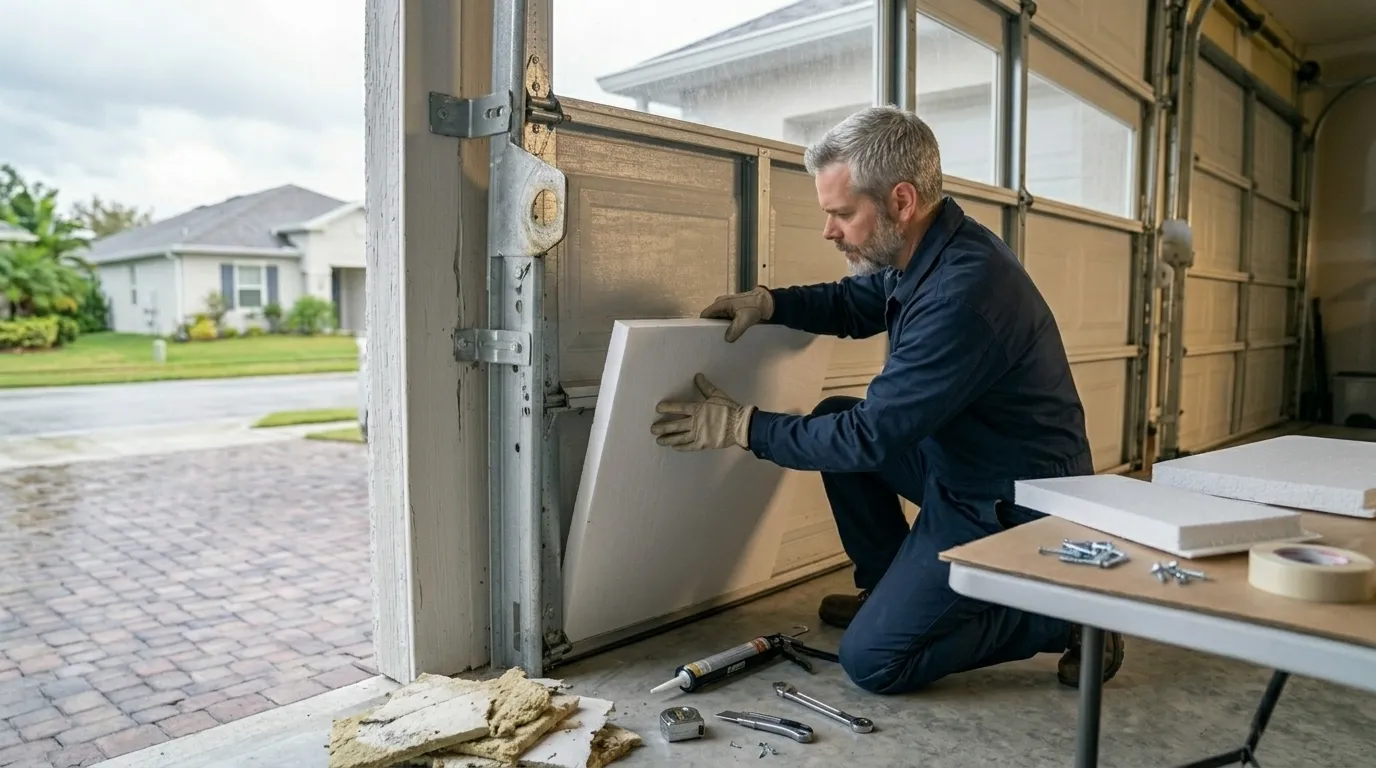
When you call for an opener install, we start by looking at what's already bolted to the header, not just the unit you want swapped in. A lot of the houses we work on around here went up between 1956 and 1991, with most of that stock clustered in the 1960s and 70s across the thirteen named areas we cover. That era of construction means headers built for lighter, single-panel doors, and bracket spacing that doesn't always match a modern opener's mounting kit out of the box.
We pull the old unit, check the header framing can take the load of the new motor and rail, and reset the travel limits and force settings so the door doesn't slam or stall halfway. If the existing track or springs are worn past what the new opener can safely work against, we say so before we hang anything - an opener install on a bad spring just moves the failure point, it doesn't fix it.
For cold-climate installs, we set the force and travel a touch different than you'd see in a warmer market, because a steel door that's stiffened up overnight needs a motor that isn't straining against it every morning. That's a small adjustment, but it's the difference between an opener that lasts and one that burns out a gear set in two winters.
Opener failures in this area usually trace back to two things: age of the house and the cold. With median construction around 1974, a huge share of the doors we service are running openers that predate today's safety reversal standards, or are second and third replacements bolted onto original hardware that was never upgraded. The gearing in older chain-drive units wears fast when it's fighting a door that's out of balance - and out-of-balance doors are common in houses this age because the springs were sized for the original door weight, not whatever's hanging there now.
The cold climate band we sit in adds its own strain. Grease inside an opener's gearbox thickens in low temperatures, motors draw more current to overcome that resistance, and capacitors that are already marginal from age fail faster in a cold garage than they would in a heated one. We see this pattern across the whole service area - it's not particular to one neighborhood, it's particular to how old the housing stock is and how cold the winters get.
Most calls for opener installation don't start as 'I want a new opener.' They start as 'the door won't open' or 'it opens partway and stops.' By the time someone's ready to replace the unit outright, they've usually already tried the wall button, the remote, and unplugging it and plugging it back in.
What we actually see on the truck: a motor that hums but doesn't turn the sprocket, a light that blinks a fixed number of times (a diagnostic code most owners have never noticed before), or a door that opens fine in the afternoon but grinds and stalls on cold mornings. That last one is the clearest sign the existing opener is undersized or worn out for the climate it's working in, not just for the door it's lifting.
Sometimes the opener itself is fine and the real problem is upstream - a broken spring, a bent track, a cable that's frayed enough to bind under load. We check those before quoting a new install, because a $300 opener won't outlast a door it's fighting against.
An opener kit from a hardware store comes with a wiring diagram and a promise that it's a weekend job. For a lot of newer garages, that's roughly true. For houses in this area's typical 1960s-70s bracket, it often isn't - the header may need reinforcing, the travel module has to be set against the actual door weight, and safety sensors need real alignment, not just a click into place.
We won't tell you it's impossible. If you're comfortable on a ladder and patient with electrical work, a straightforward install on a newer door is within reach. Where we'd push back is on doors with worn springs, older single-panel construction, or any garage where the ceiling framing looks like it was never meant to carry a motor's weight. That's not a sales pitch - it's the same call we'd make on our own garage. Get the door itself checked first; the opener is the easy part.
Usually, if the door is properly balanced and the track is in good shape. Older doors in this area sometimes have springs sized for a lighter panel than what's actually hanging there, which strains a new opener fast. We check balance before we install.
Cold thickens the grease in the gearbox and stiffens the door itself, so the motor draws more current to do the same job. Older units built before today's cold-rated components wear out faster under that extra load.
Yes - we cover the wider service area including Wilmore, Versailles, Winchester, Midway, Paris, Salvisa, Burgin, Stamping Ground, Harrodsburg, Frankfort, Lancaster, Cynthiana, and Berea.
If the door is hard to lift by hand with the opener disconnected, the problem is springs or track, not the motor. If it lifts smoothly by hand but the opener struggles, the opener itself is likely the issue.
By Neighborhood
We also handle opener installation in these Lexington-area suburbs.
Call now or request a free quote - same-day service on most repairs, upfront written pricing.