Lexington, KY · Garage Door Service
Winchester homes built mostly in the 1970s often still run original chain-drive openers without safety sensors. We travel from Lexington to fix or replace them.
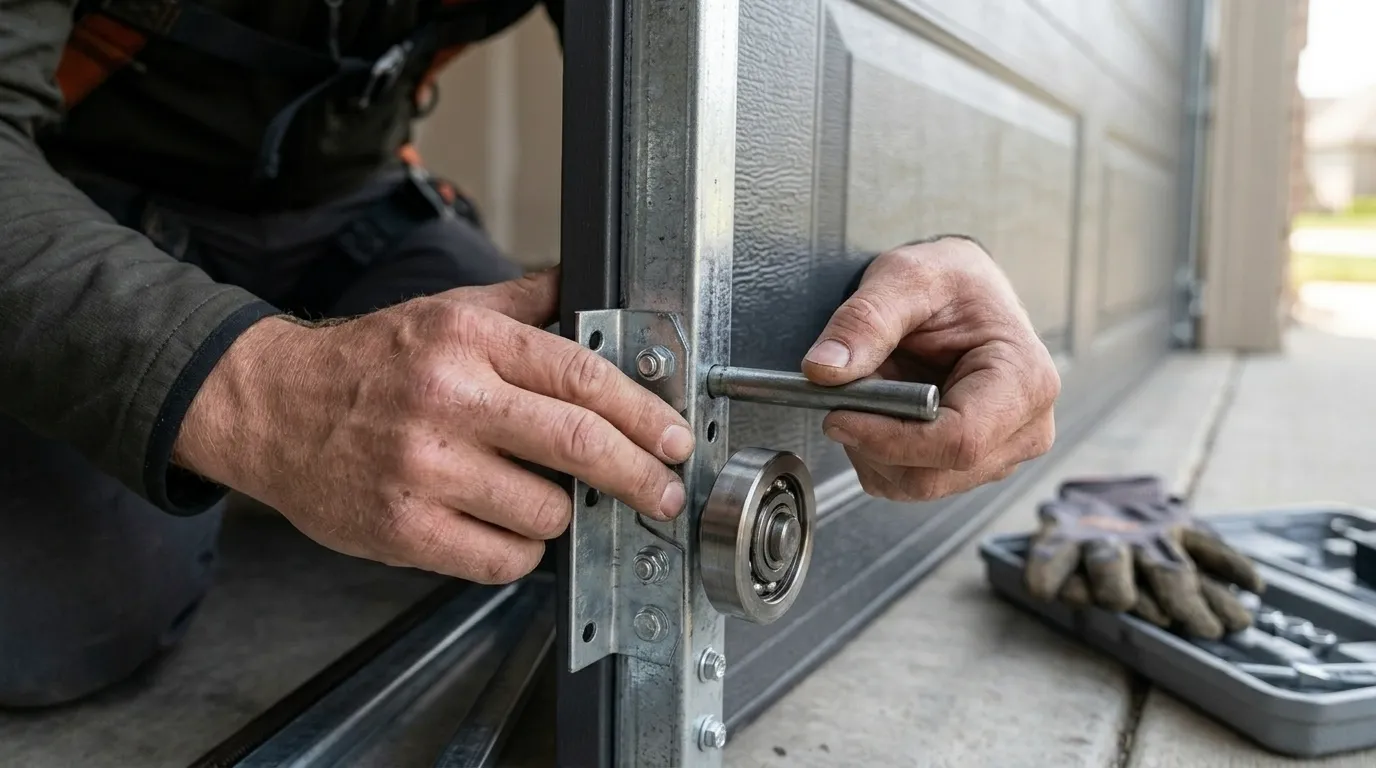
Most houses in Winchester went up in the stretch of building that centers on 1974, which means a lot of openers out there are either the originals or a first replacement from the 80s or 90s. The complaint we hear most from this stretch of homes is a door that hums, clicks, or grinds but doesn't move - or moves for the top half of the track and then stalls. On a chain-drive unit from that era, that's usually a stripped drive gear or a chain that's jumped its sprocket, not the motor itself. Some owners also describe an opener that runs but the door reverses itself halfway down, which points to a worn limit switch rather than anything electrical burning out. Because a chunk of Winchester's housing predates the 1993 federal rule requiring photo-eye safety sensors on garage door openers, we also get calls from owners whose unit has no sensors at all - it was legal when installed, but it's a real safety gap now, and it's one of the first things we flag on any visit to a house from this build era.
We carry the drive gear and sprocket kits that fail on chain-drive openers most often, along with limit switches, logic boards for the common residential brands, and photo-eye sensor kits for retrofitting openers that were installed before sensors were required. What we don't stock on the truck is a replacement motor housing for every discontinued model from the 70s and 80s - some of those parts are out of production, and if your unit is one of them, replacement is usually the faster and cheaper path than tracking down a part that hasn't been made in decades. We'll tell you straight when that's the case instead of quoting you a repair that's really a scavenger hunt.
Tightening a loose chain or replacing a lightbulb is fine to do yourself. Adjusting travel limits or force settings on an opener that has no safety sensors is not something we'd recommend touching without also fixing the sensor gap, because a miscalibrated force setting on an unsensed opener is exactly how a door closes on something it shouldn't. If your opener predates photo-eyes, that's the one repair we'd tell you to leave alone until it's addressed properly - the wiring and mounting brackets for a retrofit kit need to line up with the track, and a bad angle on the sensors defeats the whole point of having them.
The job gets harder when the opener itself is fine but the door it's lifting isn't balanced - springs from the same building era losing tension, or rollers worn from forty-plus years of Kentucky winters. Cold, damp air is hard on steel hardware over that many seasons, and an opener straining against a door that's out of balance will eventually burn out a motor that was never actually the problem. We also run into logic boards that have been swapped once already by a previous owner with a mismatched replacement unit, which can make troubleshooting take longer than the repair itself.
We start by running the door manually to check balance and spring tension before touching the opener - no point diagnosing a motor for a job the springs are actually causing. From there we test the drive mechanism, the limit and safety-reversal settings, and the sensor alignment if sensors exist. If they don't, and the door has none, that's usually where we start the conversation about a retrofit kit before anything else. Most opener repairs on the units common to this housing stock get resolved on the same visit; a full opener swap on a discontinued model takes a return trip once the new unit is in.
We're based in Lexington and drive out to Winchester for these calls, about 16 miles each way, so we schedule the trip rather than running same-day drop-ins for a single opener repair. Tell us the brand and approximate age of your opener when you call, and whether the door has visible sensor eyes near the floor track - that alone tells us most of what we need before we get there.
Federal law requiring photo-eye safety sensors on residential garage door openers didn't take effect until 1993. A lot of Winchester's housing was built well before that, in the stretch centered on 1974, so original openers from that era were built and sold legally without them. We can retrofit a sensor kit onto most existing openers rather than replacing the whole unit.
Yes, drive gear and sprocket kits are common stock parts and a straightforward swap on most chain-drive openers, which cover a large share of the units still running in Winchester's older housing stock. If the housing itself is cracked or the motor is drawing power unevenly, we'll tell you when replacement makes more sense than another repair.
No, we run out of Lexington and drive out for scheduled jobs, about 16 miles each way. We don't offer same-day emergency response in Winchester the way we might closer to Lexington itself, so opener repairs here get booked rather than worked as a walk-up call.
Call now or request a free quote - same-day service on most repairs, upfront written pricing.