Lexington, KY · Garage Door Service
Winchester homes built mostly in the 1970s still run original steel track and rollers. Here's why doors jump track and what it takes to fix it right.
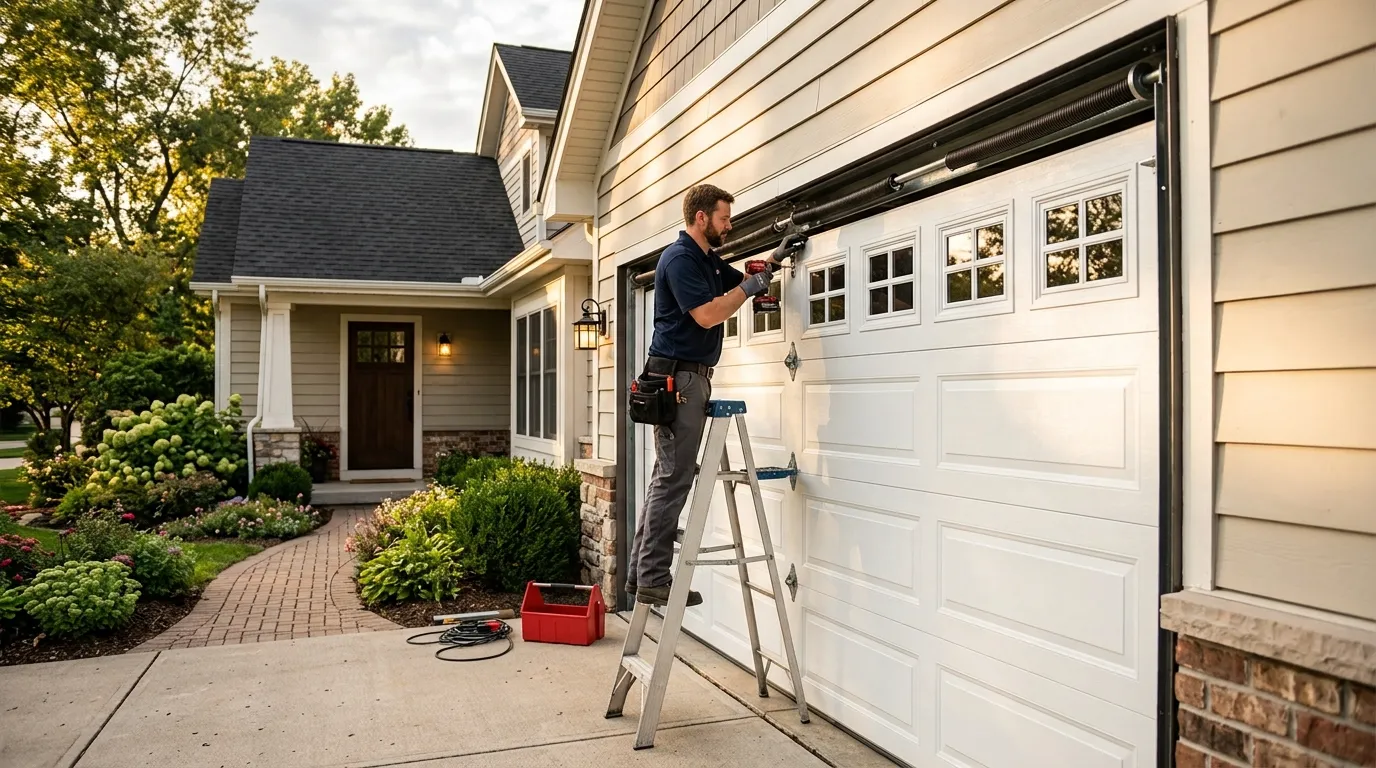
Winchester's housing stock centers on 1974, and a lot of the track hardware bolted to those garages has never been touched. That's the piece people don't think about until the door won't move. When a door jumps track here, it's usually not a fluke - it's forty-plus years of steel track brackets working loose, one bent hinge at a time, until a roller finally pops free of the rail on one side.
You'll see the door hanging crooked, one bottom corner dropped lower than the other, or the door stuck halfway with a grinding sound when the opener tries to force it. Sometimes a cable has slipped its drum instead of snapping, and the door looks off-track when the real problem is upstream. Either way, don't run the opener again once you see the tilt. Every cycle after that first jump bends the track further and turns a bracket fix into a full track replacement.
On a door original to a 1974 build, the track gauge, the roller stem length, and the hinge spacing don't always match what's sold off the shelf today. We carry the standard modern rail and nylon rollers on the truck for most calls, and those work fine once the old track is bent enough to swap. But if the fix is a bracket re-set on hardware that's still original - not a replacement - we sometimes need to match stem length or bracket hole spacing before we can bolt back to true.
That's the honest limitation: on the oldest original setups, we may need to order a matching bracket rather than force a generic one on. It doesn't happen on every call, but it happens often enough in Winchester's older sections that we mention it up front rather than promise a same-visit fix on every door.
You can get a door back on track yourself if it's a clean pop - roller out of the rail, door otherwise square, spring still holding tension. Loosen the track bolts, work the roller back into the channel, and re-tighten. That's a real fifteen-minute fix on some calls.
What you can't safely do alone is anything involving the torsion spring or a cable under load. If the door dropped because a cable let go, or if it's a double door that's racked (one side higher than the other under spring tension), that's stored energy that can break a hand or worse. On original hardware from this era, brackets can also be rusted into the jamb wood in a way that isn't obvious until you put a wrench on it and the whole bracket comes loose. If the door won't move freely by hand with the opener disconnected, stop and call it in.
The jobs that turn into bigger repairs are almost always the ones where a bent track got run on for a few days before anyone called. Winchester's climate runs cold-moderate, and a garage that sits unheated through a hard freeze will have steel track that's more brittle and less forgiving when it's already stressed - a bracket that would've held in October can shear off in January.
The other pattern: a door that's off-track on one side but the owner assumes it's just a roller. If the vertical track itself is bent, not just the bracket loose, re-hanging the roller without straightening or replacing that section means it'll jump again within days. We check both sides of the track and the plumb of the jamb before calling any off-track repair finished.
We come out from Lexington, about 16 miles, and start by disconnecting the opener so nothing runs while we're working. Then we check the door by hand - where it binds, whether the track is bent or just the bracket, and whether the cable and spring are still under proper tension.
If it's a bracket re-set, we true up the track, re-bolt to solid framing, and test the door through a full cycle by hand and by opener. If the track itself is bent or the roller channel is worn from age, we replace that section rather than bend it back, since a re-bent rail rarely holds true for long. On original 1970s hardware, that sometimes means the bracket-matching step mentioned above, which we'll tell you about before we start rather than after.
If your door is hanging crooked, stuck partway, or grinding when it tries to move, don't force it with the opener. Call and describe what you're seeing - which side is dropped, whether it moved recently or has been getting worse, and roughly how old the door is if you know it. That helps us bring the right rail and roller stock out from Lexington the first trip instead of a second one.
Winchester's median household income sits at $57,653, and most of the off-track jobs we see here are a bracket and track repair, not a full door replacement - worth knowing before you assume the whole door is done.
On older Winchester homes, it's usually a bracket that's worked loose from the jamb over decades, not a fresh problem. The door drifts to that weak point every time. Re-setting the bracket to solid wood, or replacing the section of track if it's bent, is what stops the repeat.
If the track and rollers are the issue and the panels are sound, a track repair is far cheaper than a new door. We only recommend replacement when the door itself is warped, rusted through, or the repair cost starts approaching what a new door would run - which is uncommon on an off-track call alone.
We travel to Winchester from Lexington, about 16 miles out. We don't have a set response time to promise here, since it depends on the day's schedule, but tell us what you're seeing when you call and we'll give you a realistic window.
Yes. Winchester sits in a cold-moderate climate band, and an unheated garage through a hard freeze makes older steel track more brittle. A bracket or rail that was barely holding on can shear or crack once temperatures drop, so a minor off-track issue in fall can become a bigger repair by January if it isn't addressed.
Call now or request a free quote - same-day service on most repairs, upfront written pricing.