Lexington, KY · Garage Door Service
Paris, KY commercial doors mostly date to the late 1970s. We travel 18 miles from Lexington to service and repair steel sectional and rolling doors built for that era.
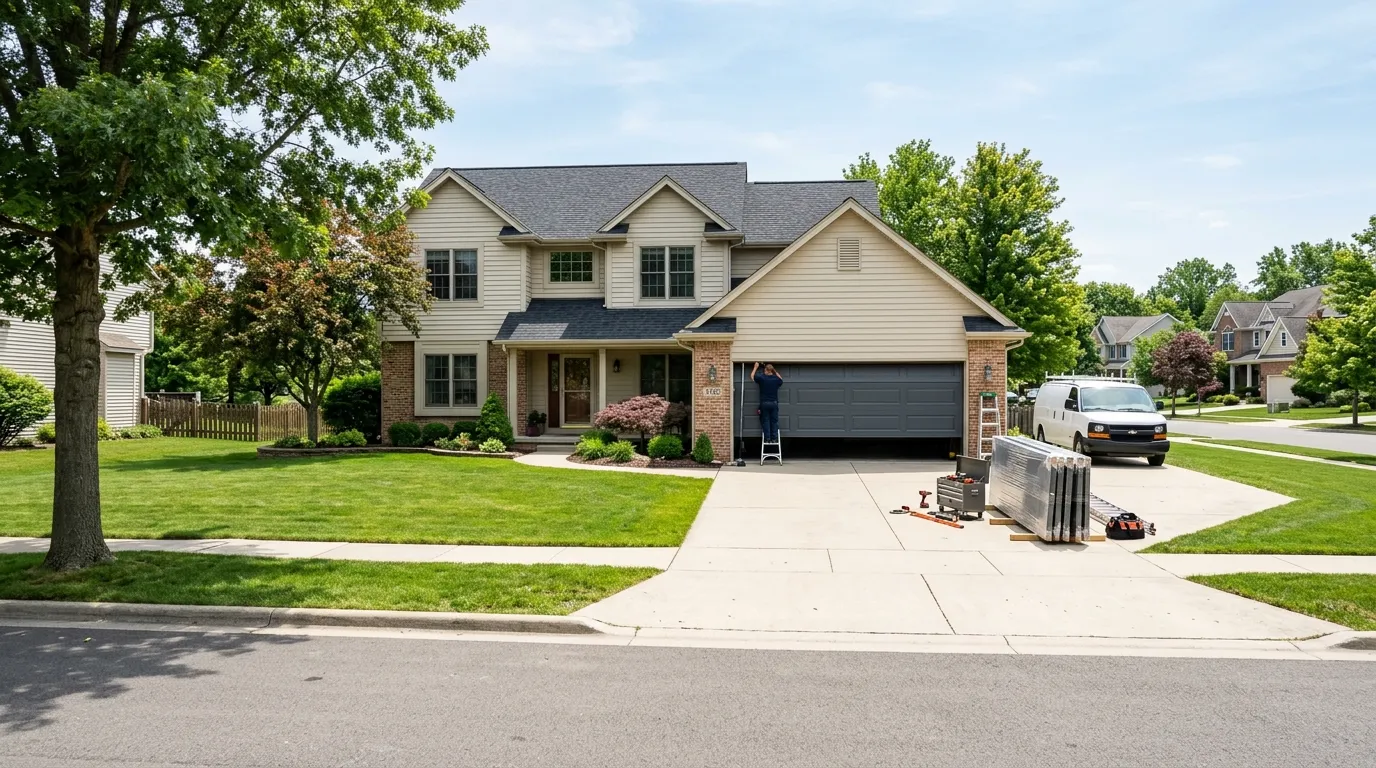
Paris sits about 18 miles from our shop in Lexington, so we're not the guy who shows up in ten minutes off a walking route. We schedule the drive, load the truck for what the call sounds like on the phone, and go. That means we're not the right call if you need someone standing in your parking lot in the next twenty minutes for a door that's blocking a delivery bay - we won't pretend otherwise. What we are good for is diagnosing the job right the first time so the trip counts, because a wasted trip on commercial equipment costs a business owner more than it costs us. Most of what we see out this way is warehouse and shop-front stock, not big-box retail, so the doors are usually single-panel steel sectional or older rolling steel, not the high-cycle systems you'd find on a distribution center. That changes what we bring on the truck and how long the job actually takes once we're on site.
The building stock out here skews older than what we see closer to Lexington. A lot of the commercial and light-industrial structures in this part of the region went up in the 1960s and 70s, and Paris tracks close to that pattern with a lot of its stock landing around 1979. That means original steel sectional doors on chain-hoist or older screw-drive commercial operators, sometimes still running on the factory torsion springs from whenever the building was last re-doored. The common failure we see on equipment from that era isn't the opener - it's the spring cycle count catching up all at once, or a track that's been reracked one too many times by a forklift that clipped it. On a 1970s-era commercial door, the panels themselves usually outlast the hardware bolted to them. If the door is original to a building from that period, the springs have almost certainly outlived their rated cycles, whether or not they've broken yet.
Paris runs a median household income of $49,464, noticeably below the wider service area's $57,653. That matters for a commercial call because most of what we work on here isn't a chain business with a facilities budget - it's an owner-operated shop or a small warehouse where the door repair comes straight out of the till. On equipment this age, the repair-or-replace line usually falls at the opener, not the door itself: a working steel sectional panel from the 1970s can be resprung and rehung for a fraction of a new install, but a burned-out commercial operator on that same door is often better replaced outright than nursed along, since parts for operators that old are getting hard to source new. We'll tell you straight which side of that line your job falls on before we start work, not after.
This region sits in a cold-moderate climate band, which means winter cold-snaps stiffen grease in old bearings and shrink steel rollers just enough to bind a track that ran fine in September. We keep torsion springs, standard rollers, and cable in stock sized for the sectional doors common on 1970s-era commercial buildings, since that's most of what we find on this side of the service area. What we don't keep on the truck is anything proprietary to a specific old operator brand - if your chain hoist is a discontinued model, that part gets ordered, and we'll tell you the lead time honestly instead of guessing. For a straight spring-and-hardware job on a standard steel door, we can usually finish in one trip.
Paris is about 18 miles from our Lexington location. We don't run a branch out there, so we're driving in for every call rather than dispatching from nearby. We schedule the trip based on what you describe on the phone so we bring the right parts the first time, but we won't promise an emergency response time we can't back up from that distance.
A lot of what we find in Paris dates to around 1979, in line with the broader stock built between 1956 and 1991 across this service area. That means original steel sectional doors on older chain-hoist or screw-drive operators, with hardware that's often outlived its rated cycles even if it hasn't failed yet.
Depends what's broken. A resprung and rehung steel panel from the 1970s is usually the cheaper move. But if the operator itself is dead and it's a discontinued brand, parts sourcing can take a while, and replacement is often the more sensible call. We'll tell you which situation you're in before we start.
Call now or request a free quote - same-day service on most repairs, upfront written pricing.