Lexington, KY · Garage Door Service
Most Harrodsburg homes went up around 1971, so the rollers still on the track are original steel - here's why they fail and what a proper swap costs to do right.
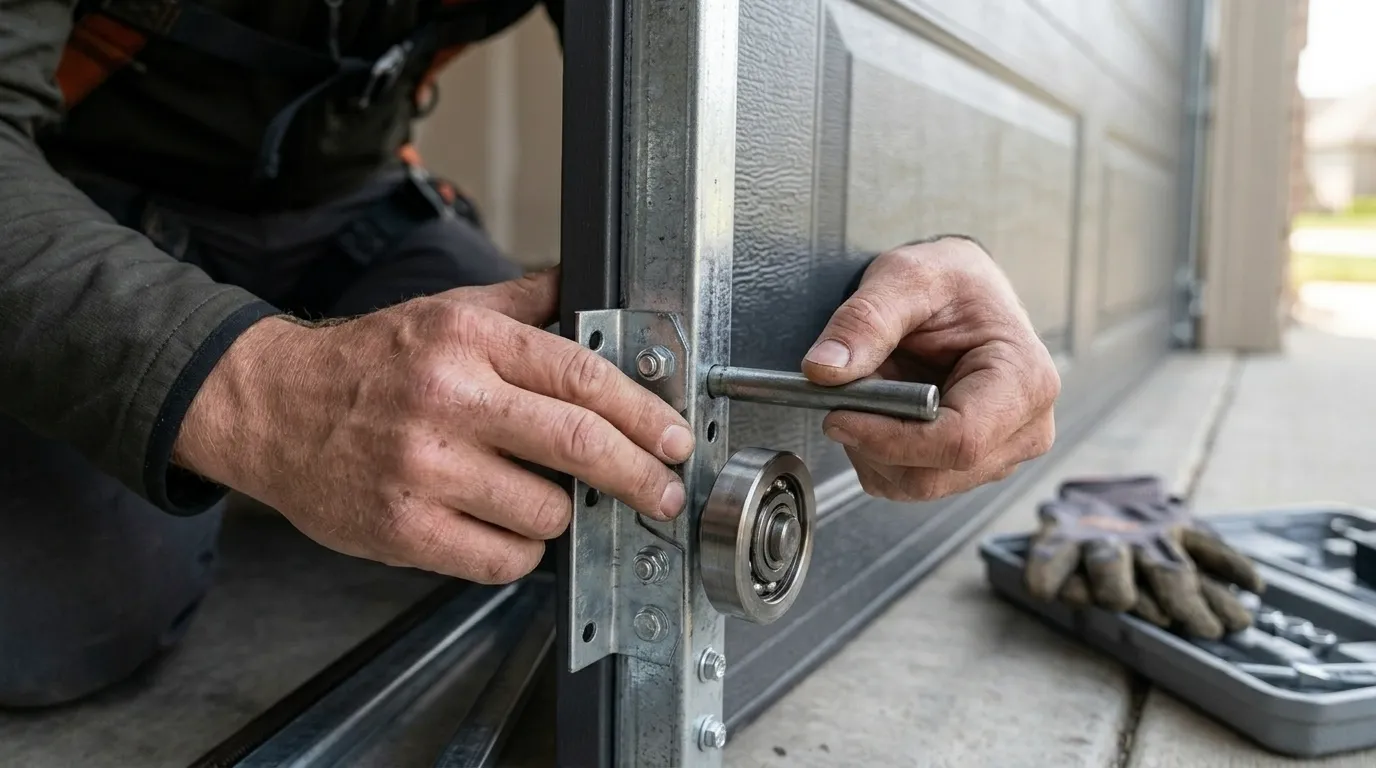
If your house in Harrodsburg dates from anywhere near 1971, the odds are decent that nobody has ever touched the rollers on that door. Steel rollers from that era were built to outlast the springs, and in a lot of cases they have - right up until the bearing seizes and the roller starts grinding a flat spot into itself on every open and close. Swapping a full set of rollers is within reach for a patient homeowner: unplug the opener, release the tension carefully, and work one roller at a time so the door never comes fully loose in the track. Where it goes sideways is the bottom rollers on a door under spring tension, or a track that's bent enough that a new nylon roller still binds in the same spot the old steel one did. We're not going to tell you it takes a crew of three - it doesn't - but we will tell you that a bent track hides the real problem, and a homeowner who reams that out by hand usually makes it worse before we ever see the door.
Harrodsburg's housing stock centers on 1971, which puts a lot of these doors on the original steel roller and stamped bracket combination that was standard before nylon took over. Steel rollers don't flex the way nylon does, so every cold snap and every years-old lubricant that's gone gummy shows up as a louder door, not a smoother one. The service area sits in a cold-moderate climate band, and steel contracts more than plastic in a hard freeze - that's part of why an old roller that was fine in August starts binding in January. Add four decades of dust and dried grease packed into the bearing, and you get the grinding, hopping, or catching that brings most Harrodsburg calls in. This isn't a Harrodsburg-only fault, but it's a build-year fault, and the build year here is what it is.
We run this job out of Lexington, about 25 miles up the road, so a Harrodsburg roller call isn't a same-morning drop-in the way it might be closer to the shop. Tell us the age of the house and what the door's doing - grinding, hopping off the track, one side louder than the other - and we'll bring the right roller stock instead of guessing on site. Harrodsburg's median household income runs lower than the wider service area's, and we price the roller job on the door in front of us, not on a area-wide average. You can see more on what we cover locally at /harrodsburg-garage-doors/, or check the general roller job writeup at /garage-door-roller-replacement-lexington-ky.
We pull the old rollers one at a time, check the stems and brackets for wear, and go over the track for the kind of bend that a new roller will just re-discover in a year. On a house from the early 1970s the brackets are often the original stamped steel, and if one's cracked or bent past straightening, we'll say so rather than force a new roller into a bad bracket. Nylon rollers with sealed bearings go in as the standard replacement - quieter, and they don't care about the cold the way bare steel does. If the track itself is racked or the door's sagging at the corners, roller replacement alone won't fix the noise, and we'll tell you that up front instead of billing for parts that won't solve it.
The call usually starts the same way: a door that used to open quiet now hops, grinds, or catches at the same spot every time, and it's gotten louder over the past few months rather than failing all at once. On a 1971-era door that's the roller bearings finally giving out after decades of use, not a spring or opener problem, though we check both while we're there. If only one side is loud, that roller's usually the one to go first - the other will follow, and replacing the full set at once is what we recommend rather than doing one side now and one later.
There's no fixed number of years, but steel rollers on a house built around 1971 have had four-plus decades of use, which is well past the point most bearings hold up. If the door's grinding, hopping, or one side sounds louder than the other, the rollers are the first thing we check.
You can, but if one roller's bearing is worn out, the rest are the same age and close behind. We usually recommend doing the full set at once so you're not paying for a second visit in six months when the next one fails.
Yes. This area sits in a cold-moderate climate band, and steel contracts more than nylon in a hard freeze. An old steel roller that runs fine in summer can start binding or catching once the temperature drops, especially if the bearing's already worn.
No - we run out of Lexington, about 25 miles away, and travel to Harrodsburg for scheduled jobs. It's worth telling us the door's age and symptom up front so we bring the right parts on the trip.
Call now or request a free quote - same-day service on most repairs, upfront written pricing.