Lexington, KY · Garage Door Service
Harrodsburg homes went up mostly around 1971, and the springs and openers from that era fail in predictable ways. We drive out from Lexington to fix them.
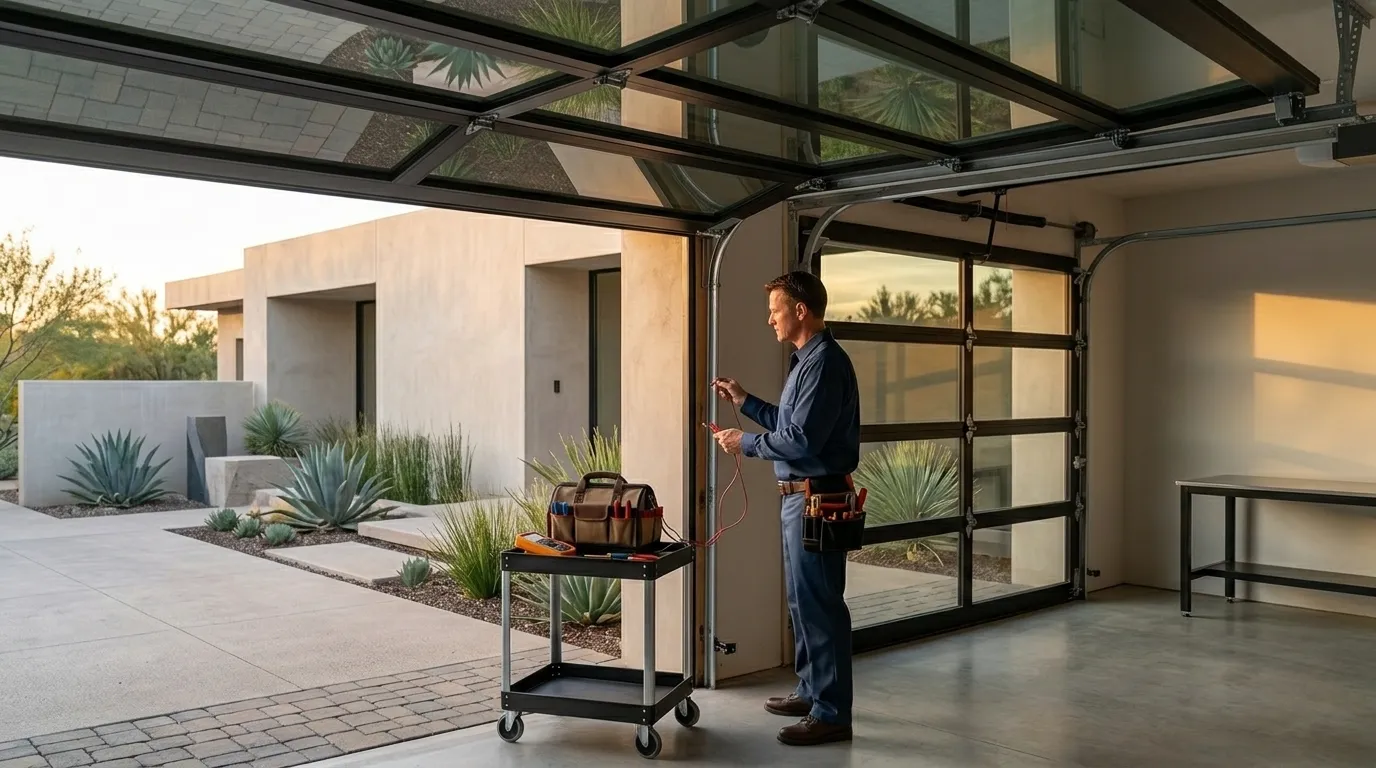
Most houses in Harrodsburg were built around 1971, which puts a lot of doors here on hardware that's now pushing fifty years old, even if the door face has been swapped once or twice since. That matters for the DIY question. A torsion spring from a door installed in that window is under real tension, and the drums, cables, and end bearings around it are often original or close to it. If you're comfortable pulling a panel or adjusting a photo-eye bracket, fine - those are low-stakes jobs. Springs are not. Winding cones snap fingers and worse, and on a door this old the mounting hardware itself may not be up to a fresh spring at the torque it was originally rated for. Harrodsburg's median household income sits below the wider service area's $57,653, which we mention only because it changes the math on repair versus replace - a straight spring swap on old hardware is usually still the cheaper call than a full new door and opener, and we'll tell you plainly when that's not true instead of upselling a job you don't need. We don't do same-day emergency service here; we're driving out from Lexington, so we book what we can confirm.
Doors going up in Harrodsburg around 1971 typically came with steel torsion springs, single-thickness steel or aluminum panels, and openers that, if original, are long gone by now - most have been replaced once already. The failure pattern we see out here tracks that: worn cable ends where the original galvanizing has finally given out, torsion springs that lost tension years ago and are just barely holding, and center hinges bent from panels that were never rated for the loads people put on them later, like a second garage door opener bracket added without checking spring balance. The service area sits in a cold-moderate climate band, and the freeze-thaw cycle works on old steel the same way it works on old concrete - microscopic rust in a cable groove today is a snapped cable in February. None of this is unique to any one house in town, but it's consistent enough across the 1971-median housing stock that when we get a call from Harrodsburg, we already have a good guess what we're going to find before we open the truck.
Harrodsburg is about 25 miles from our shop in Lexington, so a visit here gets scheduled rather than dispatched same-hour. Tell us the year the house was built if you know it, whether the door is original or replaced, and what it's doing - grinding, off-track, refusing to open - and we can usually tell you over the phone whether it sounds like a spring, a cable, or an opener board before we ever load the truck. That saves a wasted trip if the fix needs a part we don't carry standard. We ask for a bit more lead time on Harrodsburg jobs than on calls closer to Lexington, simply because of the drive, so if the door is fully stuck and blocking a car, say so up front - that changes how we route the day.
On a torsion spring job we match wire size and wind to the door's weight and drum size rather than guessing off what's currently installed, because a lot of 1971-era doors have had a spring swapped once already by someone eyeballing it, and mismatched springs are one of the more common off-balance complaints we run into on older stock. Cable and roller replacement is straightforward on these doors - the track spacing and drum sizes from that era are still common, so parts aren't a special-order problem most of the time. Where it gets slower is opener boards on units that are themselves twenty-plus years old; some control boards for older chain-drive units are no longer made, and if yours has failed, we'll tell you honestly whether it's a repair or a full opener swap rather than hunting for a part that may not exist anymore. That's the one limitation worth saying plainly: we can't always fix old electronics, only replace them.
A door that's suddenly heavy to lift by hand, or that an opener strains against before it moves, is almost always a spring that's lost tension - common on hardware installed when Harrodsburg's housing stock was going up in the early 1970s. A door that reverses immediately after closing is usually a limit switch or a photo-eye alignment issue, not a spring problem, and it's a five-minute fix if that's all it is. Grinding or popping on the way up points to rollers, and on steel track from this era, worn rollers can chew the track edge if they go too long, which turns a cheap roller job into a track replacement. If the door won't move at all and the opener light is on, check the wall switch and the manual release cord before calling anyone - that alone solves more calls than it should.
Harrodsburg is about 25 miles from our Lexington shop. We don't add a flat trip fee, but because it's a scheduled drive rather than a same-hour dispatch, we ask for a bit more lead time than we would on a call closer to Lexington.
Usually, yes. Torsion spring wire sizes and drum diameters from that era are still common stock, so parts aren't the issue. The bigger variable is whether a previous repair installed a mismatched spring, which we check for before winding a new one.
Depends on the part that failed. Motors and gears are often fixable. Control boards on older chain-drive units sometimes aren't available anymore, and at that point replacement is the only option - we'll tell you which situation you're in before doing any work.
Not reliably. We travel from Lexington, about 25 miles away, so Harrodsburg calls get scheduled rather than dispatched same-hour. If the door is stuck open or blocking a vehicle, tell us when you call and we'll route around it where we can.
Call now or request a free quote - same-day service on most repairs, upfront written pricing.