Lexington, KY · Garage Door Service
Garage door repair for Harrodsburg homes built around 1971 - steel panel doors, extension springs, and the wear patterns of that era. Service from Lexington, 25 miles out.
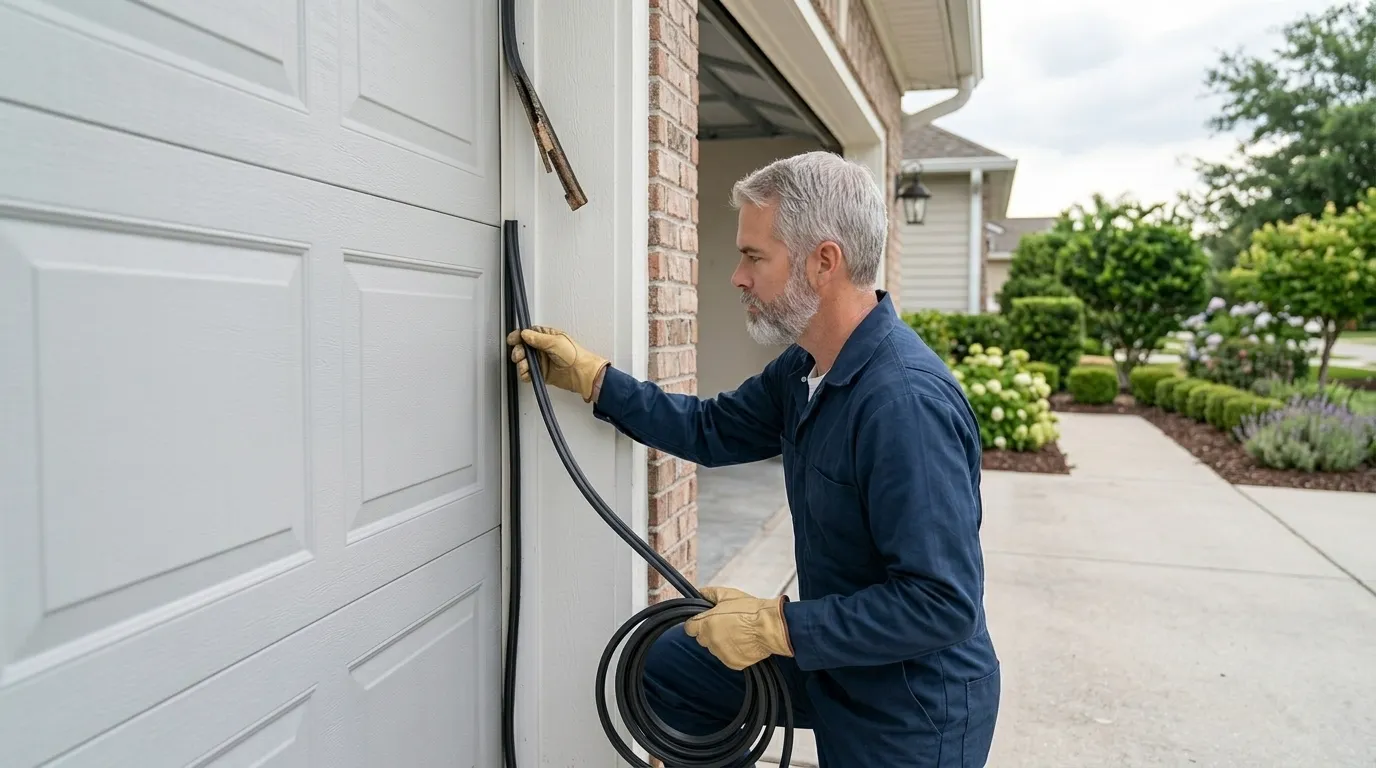
A door built around 1971 - and that's the median build year for houses in this area - is usually a plain steel panel door, no insulation, hung on extension springs instead of a torsion bar over the header. That construction is simple, which is why a lot of Harrodsburg homeowners feel fine popping the panel off and having a look. Tightening loose hinge bolts, lubricating rollers, or squaring up a track bracket that's worked itself loose over fifty years is reasonable weekend work if you're comfortable on a ladder.\n\nWhat isn't reasonable is touching the springs. Extension springs store less energy per spring than a torsion setup, but they're mounted along the horizontal track with a safety cable running through the middle, and if that cable is missing or rusted through - which happens on doors this old - a snapped spring can whip the length of the track. We don't say that to scare you into calling; we say it because it's the one place where the age of the door changes the risk, not just the repair.\n\nIf the door is heavy to lift by hand, binds partway up, or the opener strains and reverses, that's spring or track work, not a lubrication fix. That's where we come in.
Harrodsburg sits inside the same 1956-1991 housing band as most of the wider service area, but its own median build year - 1971 - puts it a few years past the regional midpoint of 1974. Doors from that stretch were built for a mild-cold climate expectation, not for the kind of freeze-thaw cycling this part of Kentucky actually gets. Steel skins that thin contract in cold weather, and on a door that's never been replaced, the panel seams and the roller tracks have had fifty winters to work loose.\n\nThe most common call we get from houses in this age bracket is a track that's pulled away from the jamb on one side, usually the side that takes the most sun and shade swing through the day. Second most common is a worn roller stem - the original steel rollers on doors this old were never nylon, and after this many cycles they groove the track instead of rolling clean through it.\n\nWe don't have weather event data specific to Harrodsburg to point to here, and we're not going to invent one. What we can say is the build era itself, which is a matter of record, is the reason the failures we see skew toward track and roller wear rather than opener electronics.
We run out of Lexington, about 25 miles from Harrodsburg, so a visit here is a scheduled trip rather than a drop-by. That's worth knowing up front: we're not a local branch with a truck sitting in town, and we won't pretend to be. When you call, tell us the door's approximate age if you know it, whether it's a single or double bay, and what it's doing - won't open, opens crooked, makes a bang when it moves. That lets us bring the right spring size and roller stock instead of guessing on-site.\n\nBecause the trip is longer than an in-town Lexington call, we'd rather diagnose as much as we can over the phone before we load the truck. If you can send a photo of the track bracket or the spring setup, that usually settles which parts come with us.
On a door from this era, the fix is almost always mechanical, not electronic. If the track has pulled from the framing, we reset and re-anchor it - on houses built in the early 1970s the jamb framing is usually solid enough to hold new lag screws without needing a backer board, but we check rather than assume. Worn steel rollers get swapped for nylon, which quiets the door down and stops the grooving that steel-on-steel wear causes.\n\nExtension springs get replaced in pairs, not one at a time - if one spring is fifty years old and stretched, the other is close behind it, and mismatched spring tension is how doors end up hanging crooked. We also check the safety cable through the spring if there is one, and add it if it's missing, since a lot of doors this age were built before that became standard practice.\n\nWhat we won't do is talk you into a full door replacement when the frame and panels are sound and the failure is just hardware. Replacement makes sense when the steel skin itself is rusted through or the panels are bowed beyond adjustment - not just because the door is old.
The door that struggles to lift, especially in the last foot before it's fully open, is telling you the springs aren't carrying their share of the weight anymore. On the extension-spring doors common to this build era, that shows up as the opener motor straining and sometimes reversing before the door reaches the top.\n\nA door that shudders or drops slightly on one side as it moves is usually a track or roller problem on that side, not a spring problem - the two symptoms get confused a lot over the phone, which is part of why we ask what the door is actually doing before we quote anything. A loud bang followed by the door refusing to move at all is a broken spring, full stop, and at that point the door shouldn't be forced by hand or by opener until it's looked at.
The median house here was built around 1971, and most original garage doors from that period are uninsulated steel panels on extension springs rather than a torsion bar. If your door has never been replaced, it's likely close to that age, which means original hardware and steel rollers rather than nylon.
No. We're based in Lexington, about 25 miles away, and we schedule Harrodsburg visits rather than running a local truck. We ask for details on the phone first so we bring the right parts on the trip.
You can, but we don't recommend it on a door this age. If one extension spring has stretched from decades of use, the other is usually close behind. Replacing both keeps tension matched so the door doesn't hang crooked or strain the opener unevenly.
That's almost always a broken spring, either torsion or extension. On extension-spring doors from this era, especially without a safety cable, a snapped spring can move violently. Don't force the door by hand or opener - leave it and call for a look.
Call now or request a free quote - same-day service on most repairs, upfront written pricing.