Lexington, KY · Garage Door Service
Frankfort's homes mostly date to 1971, which means specific spring and panel problems. Lexington Garage Door Pros makes the 26-mile drive for repairs and installs.
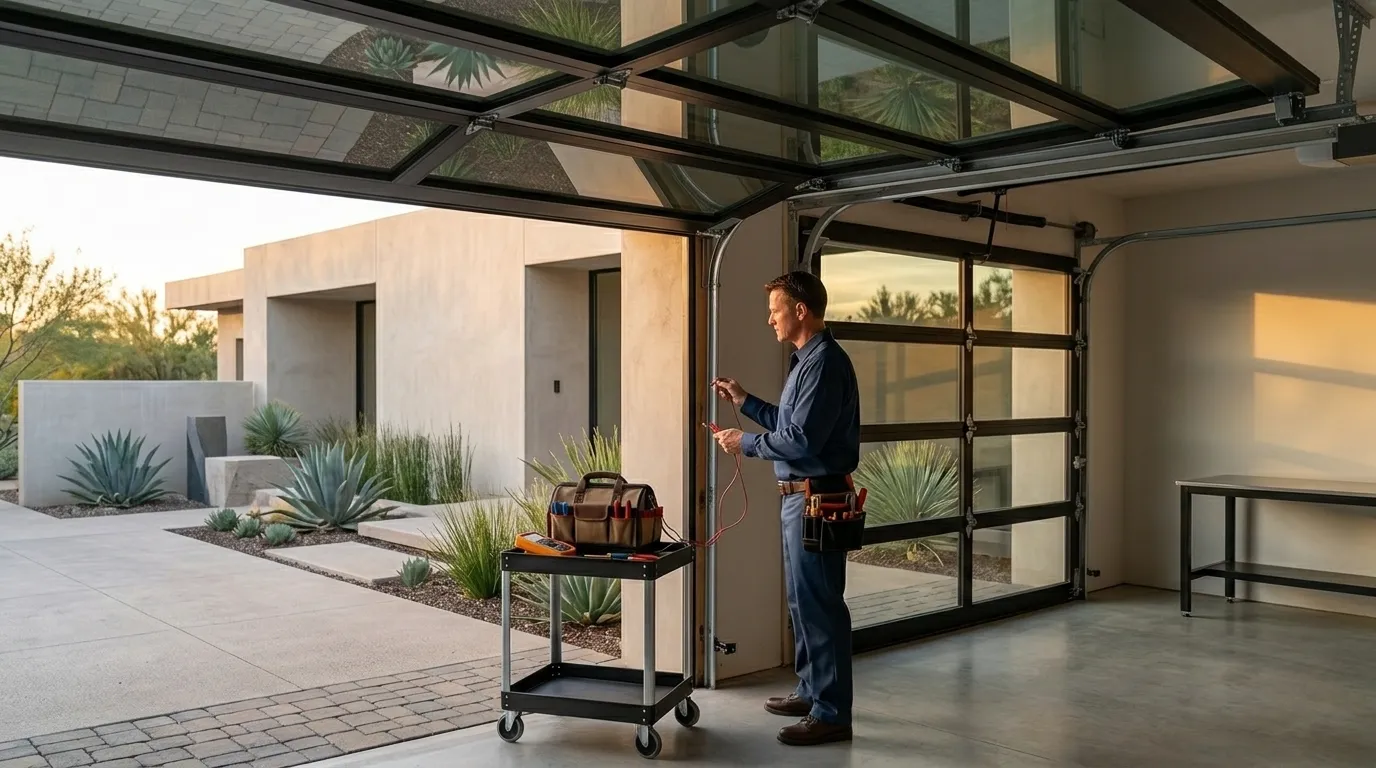
Frankfort's housing stock centers on 1971, which puts most doors in this area past their original hardware life. That era used exposed extension springs mounted along the horizontal track more often than the enclosed torsion systems that came later. Extension springs under tension are not something to unhook or adjust yourself - if one lets go while you're working near it, it can take a finger or an eye with it.
We'll tell you straight: a loose roller you can swap, a bent bottom bracket you probably can't. If the door won't open because a cable jumped its drum, or the panel is racked out of square, that's a call, not a weekend project. On the other hand, a squeaking hinge or a track that needs a wipe-down and a shot of the right lubricant - that's yours to handle, and we'd rather you save the visit for something that actually needs a truck.
We won't talk you into a service call for something you can fix with a wrench and ten minutes. That's the honest version of this section.
We don't post a flat number here because Frankfort's mix of original 1971-era hardware and later replacements means two houses on the same block can need very different work. A worn extension spring is a different job than a torsion conversion, and a door that's been replaced once already carries different parts than one still running its first opener.
What we can tell you is what drives the number up or down: spring type and count, whether the track needs realignment or full replacement, and whether the opener is original to the house or a later swap. Panel material matters too - steel doors from this era, before foam-core insulation was standard, sometimes need a full panel replaced rather than patched.
We price the job after we've looked at it, not before. If you want a number over the phone, we can give you a range based on what you describe, but the final figure comes from someone standing in front of the door.
We run this territory out of Lexington, about 26 miles from Frankfort. That means we don't have a truck sitting idle nearby waiting for a same-day call - we schedule Frankfort visits, and it's worth booking a day or two ahead rather than expecting someone at your door within the hour.
That drive is also why we ask a few questions up front: what the door is doing (or not doing), whether it's a single or double, roughly how old the opener is if you know it. The more we know before the truck leaves Lexington, the better chance we show up with the right spring or cable already on board instead of having to reorder and come back.
We're not going to pretend we're a local outfit with a shop around the corner. We're not. We're a Lexington company that covers Frankfort as part of the wider area, and we're upfront about what that means for scheduling.
The most common surprise on a Frankfort call is finding hardware that doesn't match. A house built around 1971 with a door and opener replaced sometime later often has a torsion conversion that was never quite finished right - a spring sized for the original door but not the heavier replacement panel, or a cable routed for a track that's since been swapped.
With 12,763 households in Frankfort clustered around that same build era, we see the same pattern more than once: a homeowner replaces the opener thinking that solves a slow or noisy door, when the real problem is a spring that's been undersized for years and finally gave out. Fixing the opener again doesn't touch that.
The honest limitation here: if we get out there and find the track, springs, and drums are all mismatched from different repair jobs over the decades, sometimes the cleanest fix is replacing the whole door rather than chasing compatibility issue by issue. We'll tell you when that's the case instead of billing you for three small fixes that add up to more than one new door.
The symptom we hear most from Frankfort calls is a door that binds partway up, or drops fast on the way down instead of settling. On houses from the early 1970s wave, that's usually a spring that's lost tension - extension springs stretch out over the decades, and torsion springs from later retrofits can be undersized for the door they're holding.
A second common one: a door that looks fine but sounds like it's grinding metal on metal near the top of the track. That's often a roller that was never replaced when the rest of the hardware was, riding in a track that's worn a groove to match a roller shape that's no longer there.
Steel panels from this era, installed before foam-core insulation was standard, are also the first part of the door to show it in a cold winter - warping at the seams or rusting through at the bottom where moisture sits. If your door's making noise or moving unevenly, that's usually one of these three things, not something new.
We don't quote a fixed number of minutes here because it depends on what's actually wrong and what's in the truck when we arrive. A straight spring swap on a standard double door is a different length job than pulling a whole section of track that's been bent from years of a misaligned roller.
What we can say is that the 26-mile drive from Lexington is built into how we schedule the day - we're not squeezing a Frankfort call between two others five minutes apart, so the visit itself gets the attention it needs once we're there. If the job turns out to need a part we don't carry standard, that's a second trip, and we'll say so on-site rather than let you assume it's a one-visit fix.
We'd rather under-promise on timing than have you waiting on a truck that isn't coming today.
No. We're based in Lexington and drive out to Frankfort, about 26 miles, for every call. There's no local branch or depot here, so we schedule visits rather than offering walk-up same-day service.
Most Frankfort houses were built around 1971, and doors from that era often still run on extension springs or early torsion conversions that were sized for lighter, uninsulated steel panels. Once one part of that original setup wears out, the rest tends to follow within a year or two.
Often, yes - a spring swap is cheaper and faster than a full door replacement. But if the track, drums, and cables are all original hardware from a mismatched repair history, we'll tell you if patching one part just delays a bigger job.
A day or two ahead is usually enough, since we schedule the Lexington-to-Frankfort trip rather than dispatch from nearby. If your door is stuck shut and you can't get a car out, say so when you call - that changes how we prioritize the day.
Call now or request a free quote - same-day service on most repairs, upfront written pricing.