Lexington, KY · Garage Door Service
Berea homes median from 1988 still run original steel rollers on galvanized track. We drive out from Lexington, 29 miles, to swap them before they seize a cable.
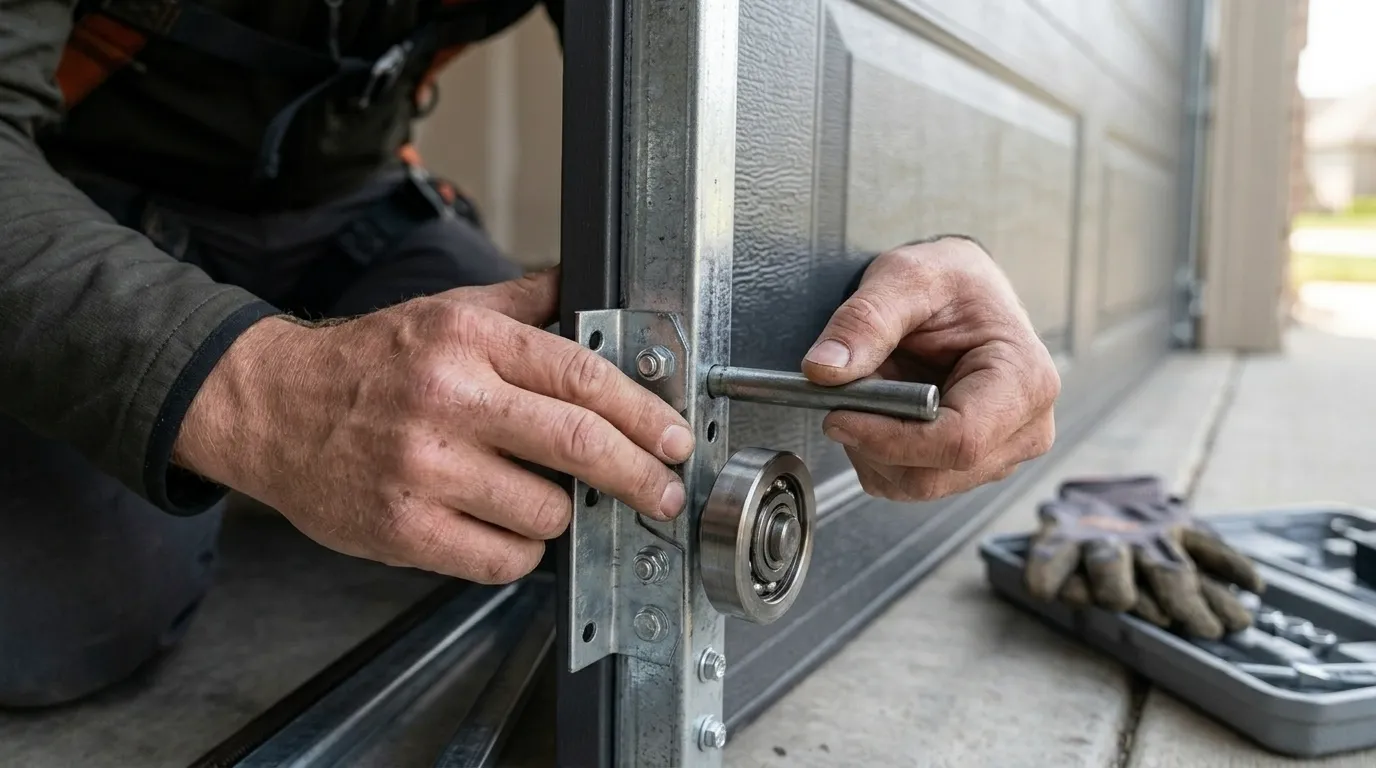
Berea's housing stock centers on 1988, which puts most doors here about a decade newer than the broader service area's 1974 median. That matters for rollers: houses built in the late 1980s mostly shipped with 7-ball steel rollers on stamped steel track, and in a lot of these homes nobody has ever swapped that hardware. Steel rollers run loud and they wear a groove into the track over three decades, which is long enough for the roller stem to start binding instead of turning.
What you pay depends on how many rollers are worn versus how many have actually failed, whether the track needs straightening where a bad roller has been grinding against it, and whether we're doing a straight roller swap or also finding a bent hinge or a cracked roller bracket while we're in there. Nylon rollers with sealed bearings cost more per unit than steel but run quieter and don't need the periodic lubrication steel rollers demand - worth mentioning since Berea's households have a median income of $56,484, and a lot of owners want to know upfront whether they're paying for the cheap fix or the quiet one.
We don't quote a number sight unseen. A tech looks at the actual wear pattern on your track before pricing it.
We run out of Lexington, about 29 miles from Berea, so there's no local branch and no walk-in counter here - the truck comes to you. That drive time is one reason we ask you to describe what the door is doing (grinding, jumping the track, one side louder than the other) when you call, so the tech shows up already knowing whether this is a roller job or something bigger like a bent track or a bad opener drive gear.
With 5,694 households in Berea and doors mostly dating to the late 1980s, a fair number of these calls are the same failure repeating across the town at roughly the same age. That's useful for us - it means we usually know what we're walking into before we get out of the truck.
Because of the distance, we schedule Berea visits rather than treat them as same-hour emergencies. If your door is stuck open or shut and you need it dealt with faster than a scheduled slot allows, say so when you call and we'll tell you honestly whether that's realistic given where the truck is that day.
Swapping a single roller on a residential door isn't complicated work in principle - loosen the hinge, slide the old roller out, slide the new one in. The part that gets people is the ones near the bottom bracket on a door under spring tension, and the fact that a track this age (pushing 35+ years in a lot of Berea's original hardware) is often bent just enough that pulling one roller lets the whole section spring out of alignment.
On a cold morning - and this area sits in a climate band with real winter cold - steel rollers that are already dry-running bind harder, and a homeowner working alone on a ladder in freezing temperatures with a door half off its track is exactly the kind of job that goes from annoying to dangerous fast.
If it's the top roller on the side away from the springs and the track is straight, a careful person with the right roller size can usually manage it. If you're not sure the track is straight, or if this is a bottom roller, call it in instead of finding out the hard way.
The failure we see most in a town like Berea, where the housing median sits around 1988, is a homeowner replacing the obviously worn rollers and leaving the track alone. A track that's been ridden by a bad roller for years develops a wear channel, and a brand-new roller dropped into a worn channel will still bind, still jump, and wear out again faster than it should. The roller isn't always the whole problem - the track it's been rubbing against is often part of it.
The other spot this goes wrong: someone replaces rollers on a door where the real issue is a weak or unbalanced spring, and the rollers take the blame for a symptom that's actually spring fatigue pulling the door crooked on its track. New rollers on a door that's out of balance wear out again within a year.
One honest limit here - if your track is bent badly enough (usually from an impact, not just age) it's cheaper to replace the track section than to keep buying rollers that fight it. We'll tell you straight if that's what we're looking at instead of selling you a roller job that won't hold.
Most homes in Berea cluster around a 1988 build year, so the original steel rollers that shipped with those doors are all hitting 30+ years of wear at roughly the same time. Steel rollers on stamped track wear predictably, which is why a lot of these calls sound identical when they come in.
No. We're based in Lexington, about 29 miles out, and we schedule Berea visits from there rather than running an on-call crew locally. Tell us what the door is doing when you call so we bring the right parts on the first trip.
If your door is original to a house built in the late 1980s, the rollers you can't hear are usually close behind the ones you can. Replacing them as a set, along with checking the track for wear grooves, is generally cheaper than two separate visits a year apart.
Yes, and a lot of owners with original 1980s-era steel rollers do exactly that - nylon rollers with sealed bearings run quieter and skip the periodic lubrication steel needs. It costs more per roller upfront but it's a straight swap on most track.
Call now or request a free quote - same-day service on most repairs, upfront written pricing.